Port Talbot Docks and Tidal Harbour

Aberafan – originally a small natural harbour at the mouth of the River Afan – had been a coal port since the seventeenth century and, from around 1750, with the development of tramline connections to coal mines within the coastal area, the level of trade rapidly increased. The establishment of copper and iron industries towards the end of the eighteenth century further augmented trade through the harbour.
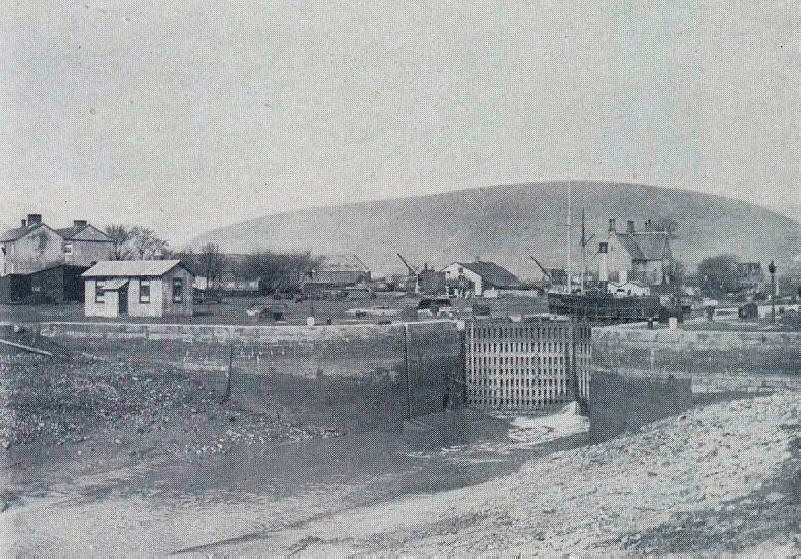
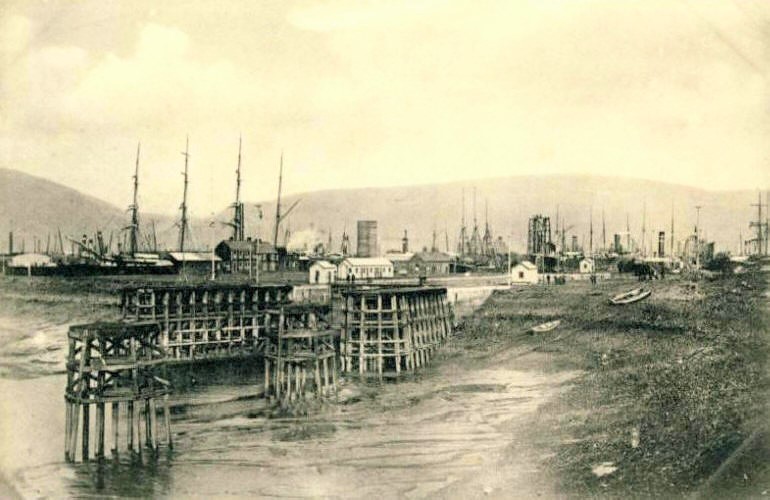
In 1834 parliamentary powers were obtained to improve the facilities of the port, and the Aberavon Harbour Company was set up to undertake this work. A further Act of 1836 – in which the company was renamed the Port Talbot Dock Company, authorised the diversion of the River Afan into a new channel or ‘cut’, and the construction of a new dock on the original course of the river bed. This work was completed in 1837, and is considered to have been the first major dock ever to be constructed in South Wales.
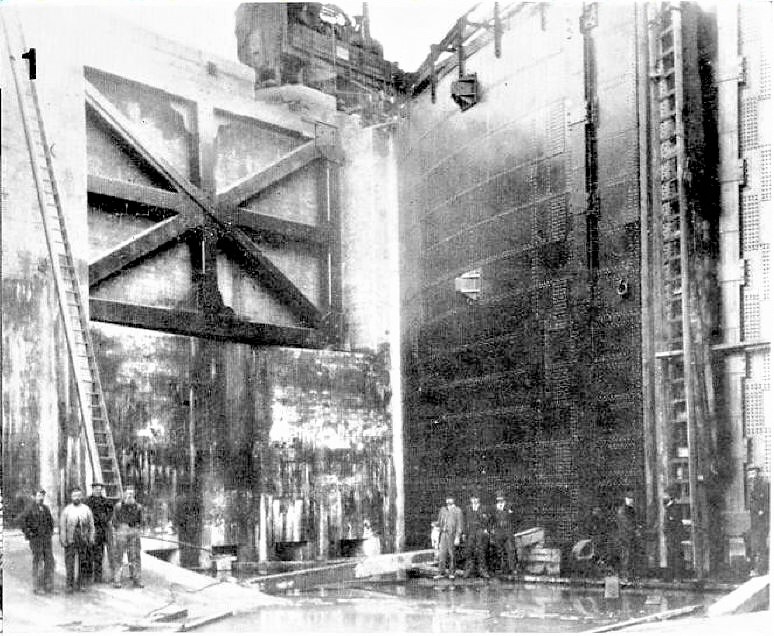
In 1874 the lock entrance to the new dock was enlarged, and in 1894 a public company – the Port Talbot Railway & Dock Company – was formed to further expand the capacity of the port. A large extension to the existing dock together with a new lock entrance was completed in 1898, and a railway system was built to connect the port with coalfields in the neighbouring Llynfi and Garw valleys. Eight coal hoists and three coal conveyors were constructed, enabling the port to load coal vessels at an overall rate of 1,600 tons per hour.
By the beginning of the twentieth century the iron and steel producing companies of the Welsh valleys were becoming increasingly dependent on imported foreign ores and, as a result, were relocating their industries nearer to the coast. The founding of the Port Talbot Steelworks in 1902 and the Margam Steelworks in 1916, for example, resulted in a significant increase in iron ore imports through Port Talbot Docks – imports that were to reach 300,000 tons per annum by 1930 and 3,000,000 tons per annum by 1960.
In accordance with the Railways Act 1921, the Port Talbot Railway & Dock Company was taken over by the Great Western Railway Company on 1st January 1923, although the transfer was considered to have been effected as from 1st January 1922. The port remained under the ownership of the GWR until the passing of the Transport Act of 1947 when, in common with other railway-owned docks, Port Talbot was transferred into public ownership under the control of the British Transport Commission. On the dissolution of the Commission in 1963 the responsibility for the port was vested in the British Transport Docks Board, which was succeeded by the present administrative authority, Associated British Ports, on 31st December 1982.
As iron ore imports through Port Talbot Docks continued to increase, the disadvantages of the port’s limited handling capacity became more apparent. The small entrance lock – 137 metres by 18 metres – restricted the size of ship that could enter the docks to approximately 10,000 tons dead-weight, so precluding the use of modern 'Cape-size' bulk carriers capable of transporting bulk cargoes such as iron ore at a significantly lower cost per ton.
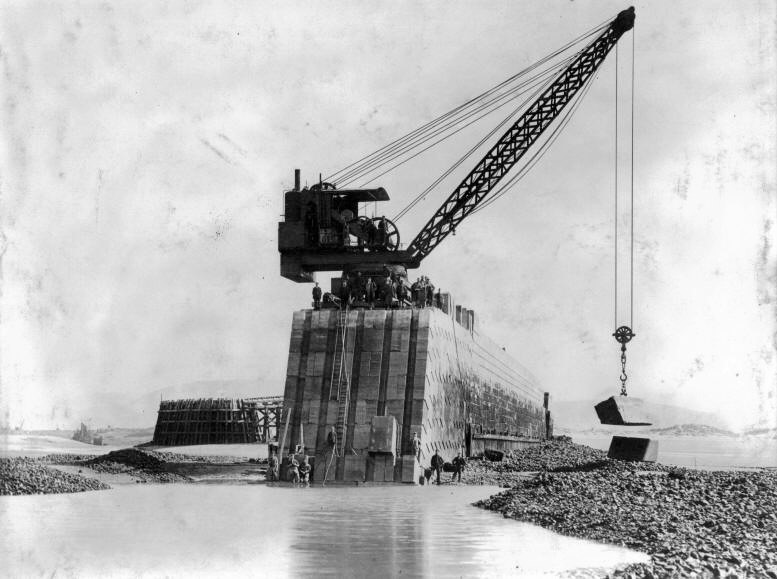
Port expansion to accommodate these new Cape-size ships was an obvious necessity so, in 1966, the British Transport Docks Board embarked on the construction of an entirely new harbour – Port Talbot Tidal Harbour – to the south-west of the existing docks complex. Completed in 1970, this was the first dry-bulk cargo terminal in the UK capable of accepting ships in excess of 100,000 dead-weight tonnes. The opening of the new harbour resulted in a considerable reduction in overall traffic through Port Talbot’s old dock system, and this was finally closed to shipping in 1971.
The first bulk carrier to enter the new harbour was the Orotava Bridge on the 15th March 1970 for the purpose of undertaking trial manoeuvres to familiarise pilots, tug crews, etc. with the handling and berthing of large bulk carriers alongside the harbour's new unloading jetty.
On the 12th May 1970 Queen Elizabeth II, accompanied by the Duke of Edinburgh, arrived at Port Talbot to undertake the ceremonial opening of the new tidal harbour. After the ceremony, which was performed in a large marquee erected on the south side of Port Talbot Docks, the Royal party visited the port's Marine Control Centre where the Queen unveiled a sundial and plaque to commemorate the occasion.
In 1989 a berth for self-discharge vessels was established on the north side of the harbour jetty, and in 1996 additional dredging was carried out to deepen the waters of the harbour by another 2.6 metres, thereby increasing the maximum size of vessel that could be accommodated to 180,000 dead-weight tonnes.
In 1998, after being closed to shipping for more than a quarter of a century, the old docks at Port Talbot were re-opened to handle coastwise cargoes of ground and granulated blast-furnace slag for Civil & Marine’s new cement works at Rio Tinto Wharf. Other cargoes handled within the old docks system in recent years have included timber, sand, stone, briquettes and a variety of heavy-lift machinery & equipment.
On 30th July 2024 the bulk carrier CMB Van Dijk departed Port Talbot after unloading 55,000 tonnes of iron ore pellets from New Orleans – sadly the last ever cargo of iron ore to be discharged at Port Talbot harbour's unloading jetty. Then on 31st August the bulk carrier Trinity Island became the very last ship to berth at the jetty, discharging 44.000 tonnes of coke from Japan before departing on the morning of 2nd September 2024.
After 54 years of continuous operation, it was a very sad moment for all concerned as the Trinity Island sailed quietly out to sea under the guidance of local pilot Capt. Ben Ball and escorted by a flotilla of small vessels including harbour tugs, the pilot cutter Terra Nova, and the RNLI lifeboats from Port Talbot, Mumbles & Porthcawl.